Education
We empower the next generation of food systems leaders through hands-on learning, career development, and academic programming.
Current global food systems have achieved remarkable historical growth and expansion, yet increasingly fail on many fronts. We witness erosion of ecosystem and cultural diversity, decreased resilience in the face of the climate crisis, wasteful and inequitable food and natural resources usage, persistent pollution, and myriad social injustices—including exploitation of food systems workers. We also watch millions of people go hungry while many others suffer from debilitating and deadly diet-related diseases.
Transformational shifts in our food and farm systems depend on interrelated changes in how food is grown and how people eat and access healthy food; social, economic and political relationships; changes in institutions and policies; and changes in how knowledge is produced and shared. Underlying transformational change is the science and analysis to inform policymaking and advance our collective understanding of pressing food system issues. BFI takes a “whole food and farm systems” approach to help advance transformational change, working across our four mission areas of urban and rural agroecology, good food access, fair and healthy jobs and racial equity in the food system.
Today, the Berkeley Food Institute is an interdisciplinary research, education and policy institute working in partnership with communities to advance just and sustainable food and farm systems. We do this work across our five program areas: Education, Research, Policy, Community Engagement and Communications.

As UC Berkeley Professor Miguel Altieri described it, agroecology is the “science of sustainable agriculture.” Agroecology is the “ecology of food systems” — a science, a movement, and a practice. The contemporary use of the term dates to the 1970s, when researchers in Mexico developed a program built on Indigenous Mayan farming practices — a direct counterpoint to the Green Revolution. As a science, it draws on principles like intercropping, cover cropping, and composting to build soil health and biodiversity, working with nature rather than against it.
At BFI, agroecology is a connective thread across our work. We support research and practice that builds soil health, biodiversity, and climate resilience while centering the farmers, farmworkers, and communities who steward our food system. From localized supply chains to fair labor to equitable land access, we believe ecological and social transformation are inseparable. Agroecology is how we pursue both at once.
From the start, agroecology’s academic roots have been inseparable from the place-based knowledge of farmers. Today, BFI’s Faculty Director Tim Bowles leads the Berkeley Agroecology Lab, continuing this legacy by studying soil health and water dynamics in California agricultural systems.

“Fair and healthy” means all food system workers receive fair compensation, safe conditions, and the ability to live full, productive lives. Research from BFI-affiliated faculty shows we have a long way to go.
California farmworkers, essential to a multibillion-dollar agriculture industry, face high rates of food insecurity while bearing the brunt of greater wildfires, heat, and pesticide exposure. Tipped restaurant workers, particularly women of color, report elevated harassment and survive on subminimum wages as the cost of living rises. This is neither fair nor healthy.
A fair and healthy job is one that contributes to the food system’s overall health by reducing environmental impacts, improving nutrition, and building community wealth. A well-trained, well-compensated workforce is essential to tackling the climate crisis, scaling sustainable agriculture, and expanding food access.
We advance this vision through research and programming, including annual career panels connecting students to food systems pathways spanning farming, technical assistance, and values-based supply chains.

At BFI, we consider Good Food Access as an outcome of food sovereignty, defined by the Declaration of Nyeleni as “the right of peoples to healthy and culturally appropriate food produced through ecologically sound and sustainable methods.” We envision a food system in which all people have access to food that is affordable, nutritious, and culturally appropriate, and where every community has agency over what its members grow and eat.
However, significant barriers remain. Despite California being one of the largest economies in the world, many Californians still struggle with hunger. Food insecurity falls disproportionately on communities of color – including the farmworkers who grow much of our nation’s produce. We see this as an outcome of “food apartheid” – a legacy of discriminatory land use and industrialized agriculture that has marginalized communities and farmworkers alike.
Through research, partnerships, and public engagement, we work to advance solutions that expand access to healthy food while building community power, equity, and resilience across California’s food system.

Racial equity in the food system means that all people, including people of color, are owners, planners, and decision-makers in the systems that govern their lives. We believe that persistent racial inequity hinders agri-food systems to the detriment of producers, consumers, workers, and the environment.
Drawing on frameworks like the Center for Social Inclusion’s foundational work, we use a critical race lens to diagnose barriers in the current system and identify pathways for change. Structural racial inequity – the way policies and institutions interact, often invisibly, to produce barriers to opportunity – remains a central obstacle to a just and equitable food system.
Within our own institution, we have implemented staff training on racial equity, reviewed our programs through an equity lens, and prioritized racial, gender, dis/ability, and sectoral diversity across our Executive Committee, Advisory Council, student leadership groups, and donor circles.
We empower the next generation of food systems leaders through hands-on learning, career development, and academic programming.

We empower the next generation of food systems leaders through hands-on learning, career development, and academic programming.
We administer the Graduate Certificate in Food Systems and support the Food Systems Minor, providing direct support to students studying food and farming systems and pursuing work experience through internship placements and mentorship programs. We collaborate with faculty to develop innovative academic courses. We go beyond campus through our career programming, which connects students with food systems professionals and BFI alumni through career panels and workshops. At Oxford Tract, our Agroecology Program offers hands-on training in urban agroecology for students — a living laboratory rooted in place-based learning – all while growing food for students served by the Basic Needs Center food pantry.
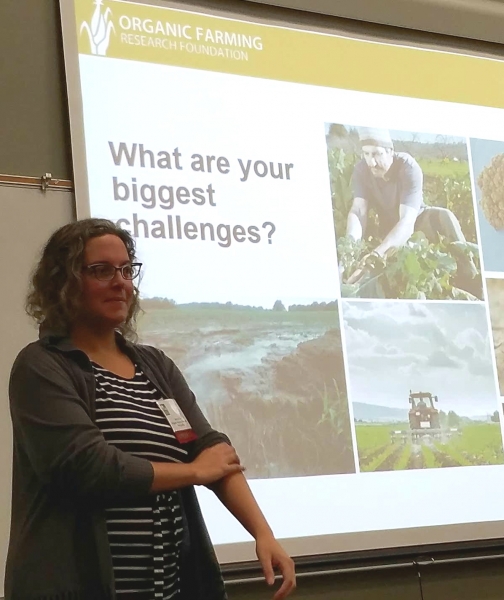
We incubate food and farm systems research at UC Berkeley and beyond, supporting an interdisciplinary community of faculty, postdoctoral scholars, research scientists, and graduate and undergraduate students working across departments, institutes, and field stations.
We incubate food and farm systems research at UC Berkeley and beyond, supporting an interdisciplinary community of faculty, postdoctoral scholars, research scientists, and graduate and undergraduate students working across departments, institutes, and field stations.
Our affiliated researchers collaborate throughout the UC system and with community partners, generating knowledge that deepens our understanding of food systems and informs more just and sustainable solutions. Through grants, fellowships, trainings, and other funding opportunities, we invest in this research community and draw on their work to strengthen all of our programming.
We leverage food systems research to inform good food and agriculture policy.

We leverage food systems research to inform good food and agriculture policy.
We publish policy briefs and reports, draft comments to government agencies, support nonprofit coalitions, and host legislative forums and trainings to connect researchers with policymakers. In our view, good food policy expands access to nutritious food, supports equitable and sustainable farming, and creates a level playing field for farmers, workers, and eaters. We believe lasting food and farm systems transformation requires policy that protects those with the least social and economic power.
We build connections across the food justice movement through free events, workshops, and trainings for community partners, policymakers, journalists and the UC Berkeley community.

We build connections across the food justice movement through free events, workshops, and trainings for community partners, policymakers, journalists and the UC Berkeley community.
Since our beginning, we’ve hosted dozens of forums, summits, and symposiums that have engaged thousands of attendees from across the food and farm system. These efforts help build the leadership and relationships needed for lasting food systems change.
Our communications program amplifies the ideas, research, and partnerships driving food systems transformation across our four focus areas: urban and rural agroecology, good food access, fair and healthy jobs, and racial equity.

Our communications program amplifies the ideas, research, and partnerships driving food systems transformation across our four focus areas: urban and rural agroecology, good food access, fair and healthy jobs, and racial equity.
We translate rigorous research and community-based work into clear, accessible, and engaging stories and resources for diverse audiences – from policymakers and practitioners to students and the broader public. Through digital publications, media outreach, events, and social media, we elevate the voices of researchers, partners, and emerging leaders working towards a just, sustainable, and resilient food system.